Showing posts with label Movie Review. Show all posts

Saturday, May 25, 2013

STAR TREK - FEMINISM & THE FUTURE: A letter to Paramount


Dear Pararmount.

I noticed that you recently released a new Star Trek movie to a theatre near me.  Doubtless, you have been waiting on baited breath to hear my thoughts on this latest jaunt with the Enterprise.  Naturally I felt your anticipation, and decided to respond in turn with this letter to you.  It seemed like the least I could do.

Right up front, I want you to know that this isn't going to be one of the J.J. Abrams bashing sessions that so many people on the internet have taken to writing.  But there are some concerning trends that I've noticed beginning to develop in the series, and seeing as this is only the second film in your re-branding of the franchise I thought we might nip some of those more negative traits right in the bud.

First lets focus on what you've already done correctly....

OVERALL (the good... or at the very least, not bad)

On the whole I'm totally on board with what Abrams has accomplished.  Of course when you're dealing with success on the level that you are it's simply an unavoidable inevitability that you will have some critics.  Most of the complaints being bandied about I disagree with, and I feel they should be addressed.  So listen up fans.  This next bit is to you.

1. "'Star Trek' and 'Star Trek into Darkness' aren't really Star Trek movies.  They're actually action movies"

This is actually a point made by my writing partner Rachel (who, I should point out, still admits that she liked both films).  Now, I don't agree with her on this, but Rachel is a really smart person, so when she made this argument I was compelled to give it some serious consideration.  And she kind of has a point.  On a whole, Star Trek has always been a space ADVENTURE series.  Sometimes those adventures have been comedies, at other times they've been physiological thrillers, others political dramas, and other times still, Star Trek has been action packed. The Trek films are no exception to this wide variation. 

With each installment the genre has always changed from film to film.  In effect each movie is like an individual blockbuster 'episode' of the overall series.  "The Wrath of Khan" was a cat-and-mouse thriller.  "The Voyage Home" was a cultural-fish-out-of-water comedy.  "The undiscovered Country" was a who-done-it murder mystery.  "First Contact" was a horror-thriller.  And so on, and so on.  It is, in fact, the strength of the Star Trek franchise that it can adapt to nearly any style of story telling.  Hell, the television shows have even been known to do the occasional period piece.  Therefore, to make a Trek film that operates as an all out Action/Adventure not only makes sense, it was long overdue.  The important thing is that the characters felt real, and they were facing the highest stakes that the plot would allow.  In this, J.J. Abrams succeeded in spades when he took the helm of the franchise.

Love 'em or hate 'em, these ARE Star Trek films, and they're here to stay.

2. "The new films are all flash and no substance.  These aren't the deep intellectual narratives that Star Trek is known for!"

To these individuals I feel compelled to pull a 'spock' and raise my eyebrow at them.  True, there have been times when Star Trek has truly nailed an emotional beat for a character.  Some in particular have done so while mirroring our own social issues and struggles against prejudice, etc.  But get real for a second here. 

Star Trek has ALWAYS been escapist entertainment first. 

That's why it WORKED so well.

While we were busy being distracted by transporter anomalies, gladiatorial combats, and exploding consoles, the shows would slip in small jabs of social commentary that would make you think.   But the story MUST come first or else you're just watching a public service announcment, instead of a space opera.

Is Abrams' 'STAR TREK' a particularly deep or introspective art-house film?  No.  Clearly not.  But neither was the majority of Star Trek in the first place.  That didn't mean it wasn't GOOD, however.  Just that it's first mission was to entertain, and entertain well.  Then, sometimes, that entertainment would surprise us with some thoughtfulness.  And, if we're being fair, there were also some pretty well developed character beats between Kirk and Spock in the newest films too.  It wasn't all just vulcan nerve pinches and phaser fights.

There was also a sword fight!
 3. "LENS FLARE!"

Fine.  We all get it.  J.J. REALLY likes himself some lens flares.  Haha.

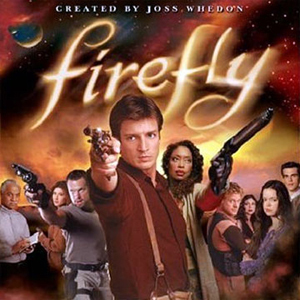
Seriously though.  Is that the worst thing about him as a director?  Really?  Until people started pointing it out I didn't even notice it, never mind consider it a BAD thing. I just can't see what the problem is.  It's lens flare.  Firefly had lens flare and that show was awesome ALL THE TIME!

Or else.

Jeez.  Get over it and start paying attention to the story.

So yeah.  I guess I'm trying to say that I'm pretty jazzed on way Star Trek has been shaping up lately.  It's changing, true, but it always has been.  In fact, if Star Trek didn't change with the times it probably wouldn't be around anymore.

This begs the question:  If I like the newest films so much, what areas do I think warrant criticism?

Specifically?  Three areas. Here we go.

THINGS TO IMPROVE (the bad... kinda)

1. TELL NEW STORIES

I should clarify on this one.  I'm NOT complaining that you brought back Khan.  He's a GREAT villain.  In fact if you wanted to bring back the Borg, the Cardassians, or The Dominion, I'd be all for it. They were all great too.

As far as Khan is concerned, I would even be quite happy if he were to return in the next movie.  At the very least, I HOPE he returns eventually. With the Dominion we got a solid five seasons out of them.  The Borg were featured in enough episodes to warrant dedicating an entire DVD box set to them. But before 'Into Darkness' was released Khan had only appeared TWICE. EVER! And he was an ARCH NEMESIS!   There are plenty of new stories that could be told about his character.  Bringing him back is not what I had a problem with.

I wanted new STORIES, and instead I was given a remake of the 'Wrath of Khan' (or an homage. Whatever.)

What, did you think I wouldn't notice that you simply remade the "Death of Spock" scene while switching the characters and calling it a day?

Honestly, I found the "Death of Kirk" scene actually suffered because of the comparison I was forced to make with it's predecessor.  The entire time I found myself thinking, "That wasn't bad, but it was better the first time".  (And the first time had William Shatner in it.  So you don't really have an excuse.) The self-referential nature of those scenes felt very masturbatory indeed, and I've never felt comfortable watching masturbation while I'm in a theatre.

I prefer to go to public washrooms for that.
I also could have done without the iconic "KAAAAHN" scream, delivered this time by Spock (instead of Kirk), Not the LEAST of which because it makes little to no sense for him (of all people) to be screaming anything. Period.  Yeah Spock was upset, and the ensuing chase scene was awesome, but even still, an emotionally distraught Spock would NOT yell into the air for no reason. 

Think about it.  Who was he screaming at? Khan?  Khan couldn't hear him.   In 'The Wrath of Khan' Kirk only screamed his adversaries name because he was talking DIRECTLY TO HIM (albeit via communicator)!  He wasn't just howling at the wind, he was Yelling AT KHAN.  Literally.

Now, it's not fair to say those scenes ruined the film for me, but they did make me feel a touch uneasy about the future of Star Trek.  I would hope that the subsequent installments aren't merely going to consist of "The best of Star Trek" simply remade with the finest CGI that money can buy.  Obviously the temptation to rehash some of the fan favorite moments from the earlier films is tempting, but Star Trek has never needed to do that before to keep our interest. and it doesn't need to start now.  Just tell us new stories about the characters we already know and love, and you will go MUCH farther in the long run.  I promise you.

2. DON'T RUSH THE STORIES YOU DO DECIDE TO TELL

Again, this is mostly directed at 'Into Darkness'.

'Star Trek' was an origin film.  It was allowed to be a self-contained, since it was setting the stage for the sequels, and it did a good job of it.  With 'Into Darkness', however, I figured that we would finally witness the beginnings of a bigger arc that would tie us into the (inevitable) third film.  It turns out that I was wrong.

I'm not saying every film franchise NEEDS to have a long serialized arc, but 'into Darkness' really seemed to be building up to something big throughout the entire film.

Until the third act.

Where it abruptly ended. 

Obviously there are a lot of elements that the third film can still use to build upon, but I couldn't help but feel there were also a lot of missed opportunities as well. 

For instance...   Terrorism.

Okay, so Khan has just rammed a MASSIVE Starship into a major metropolitan city. 

Rad.  I can dig that.

What's the aftermath?  What are the political ramifications? Could this leave the federation open to attack by one of their enemies (such as the Klingons)?  Maybe.  I don't know.  It's never really touched on. 

I didn't need any of these questions to be FULLY answered, but it sort of felt like they were completely brushed off altogether.  As the end of the film rolls around Kirk and the gang are all primed to go off on their legendary "five year mission" to seek the shit out of space and it's numerous life-filled civilizations.   Hopeful expressions are emblazoned upon their beautiful Hollywood faces as they make witty repartee about the untold possibilities that lay before them.  It's good ol' space-exploring-business-as-usual, and everyone seems to have completely moved on from the fact that  HUNDREDS OF THOUSANDS OF PEOPLE WERE ABSOLUTELY MURDERED TO DEATH IN LESS THAN A MINUTE by the biggest Starfleet ship EVER!

"Forgive and forget" I always say.
Maybe the next movie will touch on this.  I really hope it does.  But I can't help but shake this uneasy feeling that the events of 'Into Darkness' will go more or less untouched in the next film. You know... like a certain Vulcan planet that got blown up, taking with it majority of an entire species, and has only ever mentioned once in passing (during an argument about relationships) since.   I mean, come on; you'd think the federation might be reeling from the aftermath of at LEAST one of the attacks dealt by the last two villains.  I just think it would be nice to see these major traumatic events have some sort of long-term effect on the universe that these characters occupy. 

Something to think about, at any rate.
  
3. USE THE WOMEN!

I'm not the first to make the following observation.  In fact both Rachel and the considerably more famous (than me) Felicia Day have both brought this to light, but there's strength in numbers, so I'm going to add my voice to the chorus, and hope you're listening.

I like women.  Not just because they're pretty (and they really are), or because they look better in lingerie than I do (trust me on this), but because I actually know some pretty incredible individuals who happen to be women.  My wife is a woman.  My writing partner is a woman.  My Mom is a Woman.  Most of my Co-workers are women, as are many of my friends.  And you know what?  They're great.  They're competent, funny, imaginative, hard working, intelligent, compassionate, friendly, and strong human beings. (which is more than I can say for myself.  I'm the worst)

You see, aside from my general sexual preference toward women, I actually like women primarily because I like people (at least, on paper).  I like ALL different kinds of people, with different upbringings, different skin colours, from different parts of the world, and with different points of view.  A world without women would deprive me of roughtly 50% of all the wonder and intrigue I've been fortunate to experience from one day to the next.

Therefore, when I go out to the cinema, I always appreciate it when the females in my film of choice are written at least as well as the males.

So how did 'Star Trek into Darkness' fare with the ladies?  To answer that I'd first like to highlight some of the better character beats that 'Into Darkness' had to offer, starting with the Men...

THE MEN

KIRK: "I don't know what I'm supposed to do, I only know what I CAN do!"  This was great moment for Kirk, showcasing both his weakness and strength as a character.  For all his bravado Kirk is filled with so much doubt and fear, yet never lets it stop him from taking action.  Awesome.

SPOCK:  In a moment of raw humanity, shows that he does feel and hurt when he goes charging after Khan, proving that Vulcan's can be deadly warriors.  An epic moment for character who's actions are usually so meticulously thought out.

BONES:  Though he has less to do in this outing, Bones is ever the great quip-artist.  Ever comfortable wallowing in an attitude of Doom-n'-Gloom, Bones is quick to act when an opportunity to save his captain presents itself.  A loyal friend and Doctor.

SCOTTY:  The unlikely hero, Scotty was really given a chance to shine with the few scenes he was in.   Most notable is when he stood up to Kirk even though it cost him his job; a man of convictions who does what is right, regardless of whether it makes him popular.

SULU:  Bluffing like a boss.  I can totally believe that he'll be a Captain one day.

PIKE:  Wise and patient, always commanding the respect of others through his example, and filled with forgiveness and grace to those who need it most; a true mentor for Kirk.  His death was tragic.

KHAN: Lethal and Cunning, this is a man who always had the upper hand, even when he was behind bars (or glass as the case may be).  Each time he graced the screen was a terrifying delight to witness.

Alright.  Cool. 

So far we have some pretty decent stuff for a summer action flick.  The only character arguably missing form that list is Chekov, and even he has the virtue of being amusing, spunky, and markedly gifted for a kid his age.

Great.  Lets go check in with the women, shall we?

THE WOMEN

UHURU: "You brought me here to speak Klingon.  So, let me speak Klingon."

... Wow.  I... I just... Really?  That's it?  That's all you have to say?

Full credit to Zoe Saldana.  She is a fantastic actress, and brought as much gravity to her dialogue as any person possibly could, but you almost wonder why she was even hired for the part.

Don't follow?  Let's recap.

Uhuru is brought to the Klingon homeworld along with the Kirk 'n the boys to retrieve Khan.  Naturally, the Klingons aren't too happy about this and open fire on the 'intruding' human vessel.  Kirk, the testosterone-laden protagonist that he is, is all primed to duke it out.  Thankfully Uhuru has a firm head on her shoulders and realizes violence would only exacerbate the situation.

Perfect.  The Stage is set.  This is Uhuru's time to shine.  Now is her moment to make a rousing plea to Kirk.  Or perhaps throw out a quippy rebuttal to his agressive intentions.  Whatever it is, you just KNOW it's going to be awesome, right?

"You brought me here to speak Klingon."

She states a fact.  THAT is the coolest line her character has in the ENTIRE film.  She states her job.  Zoe Saldana's excellent delivery not withstanding, It's something of an underwhelming piece of writing.  But, to be fair, her time to shine hasn't happened yet.  At least we get to see her stand her ground to a gang of ruthless warrior Klingons right?  They'll be all intimidating and shit, but she'll convince them not to attack her, because Uhuru is an intelligent woman with the firey tenacity to calm even the most violent minded individuals.

Because she's a badass.

Because she is ALL that is woman.

Hear her ROAR, Damn it!

... DAMN IT!  And there she goes, with barely a whimper.  For all the build up the scene gives her, Uhuru is almost immediately relegated to a damsel in distress who would have been mercilessly gutted if it hadn't been for Khan's manly intervention.

And that's it.  For the rest of the film Uhuru basically hangs around and worries about Spock.  Oh!  And, in one scene, she got to worry about Spock while wearing a tight wet-suit.  She's so empowered.

CAROL MARCUS: Aaah the new chick.  Good.  About time the Enterprise brought a new gal along for the party.  Of course, many people will recognize her character as the mother of Kirk's child from 'the Wrath of Khan'.  In that film she was a strong-willed, intelligent woman.  No doubt, in 'Into Darkness' she will certainly join the Enterprise crew due to her credentials, instead of just batting her pretty eyes at- ... oh wait.

"If I'm going to convince you I have the proper credentials I'd better hope you won't look past my cute blonde hair and perfect teeth."
 Alright fine.  But clearly she was using her feminine whiles against Kirk because she's up to something. I mean, look at her.  She's all shifty and suspicious.  Spock feels threatened by her.  SPOCK!  She gives Khan a weird look, like she recognizes him.  What's she up to?  Is it espionage?  Is she working with Khan?  Is she here to kill Khan?  Maybe she was sent by someone even bigger and more secret!  Whatever it is, it has to be good!  She says she just wants to 'check out the new torpedos', which is perfectly acceptable reasoning as far as the plot's concerned as long as it's followed by... ANYTHING.   Is she planning to use them to blow up the Enterprise?  Is she trying to awaken Khan's 72 followers?  Has she been sent by someone else as part of some secret reconnaissance mission?  The options are limitless!

And none of them are the answer. 

Turns out she was just 'kind of curious', because her "father never keeps secrets from her usually" and she just wanted to see what was up.  That's it.  She didn't have any other information to go on.  Didn't have a back up plan if she ever found out... whatever it was she thought she was trying to find out.  Her entire function in the movie was simply to move the plot forward.

But at least she gets to prove herself later on right? At least she's a highly qualified weapons expert.  No doubt, she will prove herself as an equal to Kirk and his crew.  I mean, she obviously wouldn't waste precious screen time objectifying herself.  ...Right?

Pictured: Female empowerment: The SWIM SUIT edition!
*Sigh*

And the really frustrating thing is that the ONE skill she's supposed to have she STILL bungles.  The fact that she didn't blow up Bones along with the torpedo is due purely to the fact that she FLUKED out!  For all her apparent expertise in disarming explosives, her final solution is to 'try ripping out wires'.  Beyond that, she spent the entire film crying at her daddy, and getting injured.  And even THEN she seemed to be merely displeased that all her new friends were about to die.  As if they were her favorite toys that Dad was about to sell at a garage sale.

Here's the thing though.  I get that sex sells.  It goes without saying that Beautiful people are attractive, and who DOESN'T want to see Alice Eve in her Undies?

Communists, probably.
But see, if you have a scene with Kirk dressed down to nothing but his knickers he will at least have a chance to prove his integrity as a character later on, because he's the protagonist.  Carol Marcus only has a few scenes to define her character, and you used one of them on this...

It pains me to show this a second time, but I have to.  For feminism.
And none of them on showcasing her strengths as a person.

At the end of the day I don't remember Carol as a character, but as a sexual object.  That's kind of too bad, seeing as the Enterprise is already something of a boys club.  It would have been nice to have another REAL female character added to the mix.  Here's hoping for next time?

Speaking of Female characters. Where ARE all the women anyway?

Seriously.  Where are they?  What, did they all leave when they heard Joss Whedon was producing a new show?

Again, Felicia Day makes the point here, so I won't flog a dead horse, but there is a disturbing lack of female representatives at the captains meeting near the beginning of the film.

This is, I think, the most perplexing aspect of 'Into Darkness'.  Star Trek has traditionally always been 'ahead of the times'.  In the original series there was a Japanese man, a Russian, and an Alien all on the bridge of one ship.   When it came to women, Star Trek actually went the next step and cast an African American woman like it wasn't any big thing.  True, at the time Uhuru was little more than a secretary taking calls for the captain, but it was the 60's.  It wasn't perfect, but it was a step in the right direction.

By the time Star Trek entered into the 21st century there had been female characters filling the positions of Doctor, Science Officer, Chief Engineer, First Officer, and Even Captain.  Sure, there was Seven of Nine, and T'Pol, whose attire accentuated certain *ahem* assets.

Like Seven of Nine's... eyebrow.
But by-and-large both ladies grew as characters BEYOND their sexual appeal.  Star Trek was a pretty well rounded universe filled with badass, layered, conflicting, heroic characters, both Male AND Female.  Both sexes worked along-side each other as equals.  It was not unheard of for Picard to be given orders by a female superior officer.  Kira would often challenge Sisko if she disagreed with him.  Janeway's leadership brought Voyager safely back to the Alpha Quadrant.

Sadly, her hair bun would be one of the few casualties.
These were women that I could look up to not because of their sex, but because they were strong, kind, compassionate, and intelligent individuals.   Star Trek is all about equality and acceptance of others, and in that sense 'Star Trek into Darkness' failed meet the bar, never mind raise it.

If you only take ONE of my criticisms to heart then please make it be this last one.  You have a rare opportunity to tell new stories about these beloved characters.  My challenge to you is that you redefine characters like Uhuru and Carol Marcus not by showing us more skin, but instead by showing us their strength as characters, and women.

WRAPPING UP

I know I've written a lot of words seemingly tearing apart your fancy blockbuster, but that honestly isn't my intention here.  Truthfully, I did enjoy myself, and I hope to see Star Trek Live long and Prosper for as long as I'm alive.  But please, PLEASE don't succumb to being merely accessible in the present.  Show us something that we all can strive for in the future.

Be ahead of your time again.  I'd pay money to see that.

Sincerely, a Trekker forever.


-Fenske
(If you like what I have to say on my blog, check out what I can do with 140 characters or less, and follow me on twitter.)

Friday, December 7, 2012

SPIDER-MOVIE - PART VII: Serial Stand-alones


I'm going to attempt something VERY difficult with today's post.  I'm going to NOT bring up comics as much as possible.  I will have to refer to them at times, as this series is dealing with a character rooted in comic book pop culture;  Barring necessity, however, I plan to talk about the movies based purely on their merit as films.

So.  Jumping in.

When constructing a story it's important to decide which themes are going to take the primary focus, what will be used for support, and which parts of your story can be entirely removed.  As an outsider it can seem obvious at times, but a lot of writers/directors/storytellers can become attached to their own work and lose any sense of objectivity.  While it can happen in any entertainment medium, it is sadly film that hits this wall the most blatantly.

Pictured: A storyteller losing his objectivity.

The thing a lot of people forget about movies is that they are the short stories of the film medium.  Whereas with a show like 'Breaking Bad' the episodes behave more akin to chapters from a novel, films tend to be self contained and don't have the opportunity to delve into the individual characters and subplots as thoroughly (like a short story).  The exception is with 'film series'.  By that I don't mean franchises like 'Indiana Jones' or 'Die Hard' which are disconnected films about one character, but instead serials like 'Star Wars' or 'Lord of the Rings'.

Many times arguments will break out about which format is better, and as always, the answer depends on what you're trying to accomplish with the characters.  It's not enough to say that "a movie should be enjoyable ENTIRELY on it's own" because some films are crafted to be a 'part of the whole'.  It's fine for 'Fellowship of the Rings' to be your favorite LOTR film, but the fact remains that without part's II and III the first part doesn't have much of a resolution.  Does that mean that 'Fellowship' is a bad movie if part II and III don't hold up?  No.  But it does mean that when evaluating part I you have to consider it for what it is, part of a series and NOT an individual work.

If I watched the first episode of 'Firefly' with the same mindset that I watched (for example) 'E.T. The Extraterrestrial' and then decided that "it was bad" on the grounds that it left a lot of unresolved plot threads I would be rightly branded an idiot. 

"He didn't even watch 'SHINDIG'!?  I can't believe I gave him my phone number.  Quickly, Shun him!"

In order to accurately judge the show I would have to watch AT LEAST several more episodes to see how the story and characters progress. The first episode doesn't resolve the larger story because it ISN'T SUPPOSED TO.  It's a series.  That's the point.

Some films operate based on the same basic principle of a serial television show, except that in this case you can expect fewer episodes, greater distance between them, and a considerably larger budget each time around.  Not unlike a very expensive mini-series.  The Pro's are that you have more time to develop characters, introduce a larger supporting cast, and build to a bigger climax.  The Con is that a poorly executed climax can retroactively weaken the earlier films. 

"The first two were really good, and then that third one ruined the entire experience!"

The thing that needs to be considered when taking on a large character like Spider-man is; "what type of story format most adequately befits Spider-man?"  Let's take a comparative look Webb and Raimi's work, starting with...


SPIDER-MAN (2002) - Directed by Sam Raimi

I know a lot of people prefer Raimi's Spider-man films because they stood alone more sufficiently without relying (as much) on the other films in the series.  That is a fair opinion, but I'd be lying if I said that very same reason wasn't, in fact, my problem with Raimi's films.  That is to say; Sam Raimi's films would have been better if they HAD relied on each other more.

Also, it would have been better if this had just NEVER happened at all.

A big reason that Spider-man is such an effective character to begin with can be linked to the fact that he is a DEVELOPING serial character.  Over the course of his comic adventures the character grew and changed, graduating from high school and then college, getting into and out of several relationships, and getting into increasingly more embroiled battles with his recurring villains roster.  These weren't things we were just TOLD about, but rather things that we got to actually SEE.  It wasn't just that Spider-man saved lives while doing "all the things that a Spider can", it was that we got to see him grow and mature over the years as a character; something you can't accomplish in the same way with a single film.

In 'Spider-man' (2002) Peter is fast-tracked into becoming the fully prepared superhero by the end of the film.   Raimi did leave open a couple characterization points for a potential sequel, but there was an understanding that "if, for some reason, we don't get to make a 'part 2' then you should know that we've covered most of the major beats in Spidey's journey as a character."  Sure the sequels threw some new dilemmas, moral or otherwise, at the character but for the MOST part the man he becomes by the end of the first film is who he continues to be throughout the sequels.  His relationship status changes, and he goes through a couple patchy areas that test his convictions, but you could rest assured that by the end of each film he would be back to his crime-busting-web-slinging-super-responsible self.

RELATIONSHIPS
Naturally, the Raimi rooters will point out all the wonderful supporting characters that Webb "failed miserably" to include in his film.  The most notable case of this would be that of the 'Daily Bugle' staff members such as...

-       J. Jonah Jameson
-       Robbie Robertson
-       Betty Brant

Yes, Raimi was able to include ALL of those characters (in his first film no less).  Good for him.  Sadly, it was also a feat that he 'Failed Miserably' to execute with any grace. 

J. Jonah Jameson was expertly cast (J.K. Simmons for the win) but he was two-dimensional at best, and even then he barely had time to do anything but loudly proclaim his distrust of Spider-man.  Most folk will argue that he was always a 2-D character in the first place, but that's not a good enough excuse for me.  Take 'Ultimate Spider-man', for example, where Jonah was portrayed as crusty and unpleasant, but also not without a human edge.  In that version of the story J.J. still maintained his vendetta against Spider-man but it also came back to bite him in the ass a few times.  His actions came with REAL consequences and a satisfying resolution (he ultimately admits his mistake).   In the movie he's played off as comic relief and does very little to further the actual story.  He's present in the film merely as a form of FAN service, but as a result does the CHARACTER very little service.

The same can be said for Robbie and Betty.  Robbie Robertson is supposed to be a strong willed hard-edged-but-moral counterpoint to Jonah.  He's the diplomat that smoothes things out with everyone else while respectfully calling Jonah on his bullshit behind closed doors.  In the film he's portrayed as a good-natured-but-ineffective sparring partner for Jonah.  Meanwhile, Betty Brant was chalked up to a glorified bit part in the film.  Obviously they couldn't focus on her too much as MJ was the main love interest, but to declare 'victory for Raimi' just because he crammed a character with the correct name into his film doesn't mean that it added anything beneficial to the story whatsoever.

Not that I was complaining at the time, mind you.

That's not to say that the bugle staff weren't memorable, or even fun to watch, but they did take up a lot of time that could have been spent on the other relationships.  Aunt May never really got a chance to develop into something other than a strong-yet-naive shoulder for Peter to cry on.  For that matter I never got a really clear idea of what Peter's relationships with Uncle Ben and Aunt May were, other than that he liked/loved them, and was sad when Uncle Ben passed away. 

For instance, when Uncle Ben gives peter 'the responsibility talk' it stems (seemingly) from ONE skirmish that Pete had with Flash Thompson.  Sure Ben makes some veiled references to "those weird experiments" in Peter's room, but really there doesn't seem to be a major reason to get overly concerned about Pete's behavior (at least not that Uncle Ben would be aware of).  The performances by the actors were pretty spot on, but as for the reason given in the script for the tension between the characters, it never felt QUITE right.   If more time had been spent on moments such as that one instead of trying to squeeze in as many characters/references from the comics as possible then the relationships may have seemed less... condensed.

THE PLOT
Another thing I think Raimi's film suffered from (now looking back) was it handled the  incorporation of Spider-man's origin.  As I stated before, Spider-man's origin in Amazing Fantasy (Issue #15, august 1962) is a singular story entirely disconnected from any of the adventures he later went on to have with his more infamous rogues.  It's a good story, certainly, but not long enough to make an entire feature film out of, and as audience members we would all be pretty ticked if we had to wait for the sequel before watching Spidey go toe-to-toe with villains more challenging than the unnamed 'Burglar'.  So of course the challenge becomes one of trying to integrate two stories (the origin of Spider-man, and the Origin of his first villain) into one film as seamlessly as possible.

In all fairness, Sam Raimi approached this problem in the EXACT same way I would have were I in his shoes. 

And it is the wrong way.  Sadly.

He did exactly what the comics did.  First he told the story of Peter Parker (while separately prepping the grand entrance of the bad guy), and THEN introduced the story of Spider-man's battle against the Green Goblin.  The first half hour+ of the film (being bitten by the Spider, Uncle Ben's death etc.) was completely disconnected from the rest. 

-       The Spider?  A complete accident entirely unrelated to anything to do with Norman becoming the Green Goblin.
-       Uncle Ben and the lesson of Responsibility?  Again, not connected to the Green Goblin.  Okay sure, Peter quotes the 'with great power' line later on in the film.  But after discovering who Ben's killer is, it's a lesson that he never returns to.  It is established why he's Spider-man, why he doesn't put himself first, but beyond that his origin has NOTHING to do with his relationship with Norman Osborn (except Norman being bad=irresponsible, and Peter being good=responsible).

'Spider-man' is practically two films somewhat awkwardly rolled into one.  It tells the story of Spider-man accurately and even reverently, but telling the story of Spider-man in the format of a film requires that the ENTIRE film feel connected in its accurate reverence.  It was a point many of my friends and a number of reviewers made about why they preferred 'Spider-man 2'.  With the origin out of the way the second film gets to focus on ONE story without having to deal with the chore of explaining who Spider-man is on top of that.  But why should that be a chore? 

'Batman Begins' was able to tell one story and tie the Death of Bruce's parents to his decision to fight crime and (by the end of the film) Liam Neeson.  'Iron Man' was also able to accomplish the same thing by accurately depicting his origin while tying it to the larger plot in the rest of the film.  His kidnapping wasn't a separate event that had nothing to do with the final 'boss fight'; instead it LED (or built, if you will) to the final battle.  Much in the same way a story would.  Just the one story.  To go with the one film.

LEAVING US WANTING MORE
As I indicated a few paragraphs ago, and in my last post (about the villains), Raimi's first film didn't really leave itself anywhere to go.  By the end Peter had...

-       Graduated high school? Check.
-       Come into his own as a superhero with a competent handle on his powers? Check.
-       Established a clear sense of purpose with all his priorities about responsibility in order? Check.
-       Successfully faced off and defeated his first major villain in life or death battle?  Check.

At that point there were only two unresolved pieces of the plot that (technically) needed to be tied up.

And contrary to what Raimi believed, "Who shot Uncle Ben" wasn't one of them.

1. THE ROMANTIC SUBPLOT
Keeping the tension between the romantic leads works in theory, but the problem with the "love story" (besides what I stated before) was that its resolution in the first film was completely unnecessary.  Peter just decides for MJ that having her in his life will put her in danger, which is true, but shouldn't he maybe let MJ decide whether she wants to take that risk?  At the very least why not tell her "I'm Spider-man, and THAT is why I can't be with you" (exactly as he told her in the sequel).  Even that would be okay because it distances himself from her, but the problem is that he also indicates that he'll still be there for her, albeit as a friend, as if that'll be safer than dating her in some way.  How does that protect her?  If Peter's enemies discover his secret, are they going to just leave MJ alone because "she's JUST a friend"?  As if Super-villains have some sort of code that allows them to ONLY target 'significant others,' but to leave all the other close friends and relations alone?

Suddenly, Jimmy Olsen being Superman's 'pal' has a whole new meaning.

I don't care if Spider-man has broken up with women in the comics for the very same reason; it's bad writing. Period. And it shouldn't be repeated.   There was no REAL justification as to why Peter couldn't be with MJ beyond "it might not be safe... and stuff." It was poorly delivered, arbitrary drama, thrown in at the end just so there would be something for the sequel.  Because heaven forbid a superhero movie tackles a relationship BEYOND the stage of "will they or won't they?"

2. HARRY OSBORN'S REVENGE BONER
The concept behind this plot is pretty solid in theory; "Disgruntled by his father's death the grieving son unknowingly vows vengeance upon his best friend." Sounds good to me. The problem isn't in the concept but, again, the execution.  The ENTIRE thing could have been avoided if Peter had just let Norman (a very dead man) take the fall for the Green Goblin's crimes.  You may argue that Peter is being noble in honoring a dying man's last request ("Don't tell Harry!"  *die*), but I would like to point out that No.  He is not.  Peter is not being noble.

"What are you talking about?  Harry is grieving!  If Peter reveals the truth about Norman to him it would crush him!  Also, isn't that rather selfish of Peter to go against Norman's dying wish JUST so he can clear his name?  Isn't that... IRRESPONSIBLE even?  Eh? Eh?"

Again.  No.  It isn't.

By not telling Harry NOW he's only setting him up for even greater pain and misery in the future.

Like, hypothetically speaking, an explosion to the face.

Of course learning that his father was an insane psychopath will be hard, but Harry is also this thing called 'a grown man.'  Just assuming that he's too sensitive to handle the truth is not only insulting, but it also leads to a whole ton of needless death, destruction, and property damage.

Remember that time Doctor Octopus threw a car at Peters head? That only happened because Harry told the Doc to talk to Peter about finding Spider-man, and... throwing a car at his head was the best way to... do that.  Or something. But I'm not here to question the good Doctor's questionable interrogation tactics.

Oh good.  Now that you're dead, would you mind telling me where Spider-man is?

What I AM trying to bring to your attention is that everything from then all the way to the ensuing train fight with the countless property damage is all because Harry wanted revenge.  A revenge he wanted because no one (not even that inexplicably gifted forensic analyst of a butler) bothered to sit Harry down and say; "Hey, about your father being dead.  That's because he was murdering people while dressed up like a power rang- I mean a goblin.  I really wish it could have gone down differently."  Peter is now suddenly RESPONSIBLE for a whole shit ton of misery and property damage simply because he didn't have the stones to tell Harry what he knew.

And as for honoring Norman's dying wish.  Why?  Why would you do that?  He's a bad man whose dying request should have garnered zero consideration from our hero.  "Don't tell Harry?  Fuck you.  You're EVIL!  Maybe you should have considered your sons feelings BEFORE trying to murder a trolley full of children!"

 "You have to choose between saving the woman you love or these innocent Children! 
...And don't tell Harry."

I don't have anything against the 'Harry hates Spider-man' story, but at least give me a logical explanation as to why it needs to happen.  As it stands Spider-man (along with Harry's butler) is either a complete idiot, a huge dick, or both.

My point is, of the two unresolved plot threads in the first movie, one was created for arbitrary drama, the other was poorly executed, and neither was about Spider-man's growth as an individual.

GRADE/S

So if I were to rate the film?  Much like with my grading of the villains I would need to give the film two separate ratings to fairly evaluate it's worth.  Therefore...

As a standalone Spidey film I would rate 'Spider-man' as:  6.5 out of 10. 

In spite of my criticisms I really do really enjoy this film, but that enjoyment doesn't change the fact that it's still light, cheesy, popcorn fun.  Of course Spider-man SHOULD be fun, but being fun doesn't NEED equate to being campy either, and this movie is VERY campy at times. MJ and Harry's unresolved storylines were frustrating, but over all the film tells an enjoyable little story, just not a life changing one.  Once upon a time I would have given this a higher rating because seeing Spider-man on the big screen was a feat I never thought possible.  But in retrospect there are many elements of the film that don't hold up.  So, good job Raimi.  Not a great job.  But good job all the same.

As the first film in series I would rate ' Spider-man' as: 4.5 out of 10

'Spider-man' doesn't really leave itself any room to grow. The primary adversary is dead, and Spider-man himself has practically reached full maturity.  As a result the character is spinning his wheels by the third film, with increasingly contrived emotional obstacles being thrown at him the farther he goes.  It doesn't help that each subsequent villain is progressively underwhelming.

Okay, I'll admit this was pretty cool, but still.  "The chip made him bad?"  Come on.

It seems clear to me that Raimi really didn't go into this series with a distinct 'plan of action,' so much as a 'vague idea' that future sequels might be a possibility.  I don't think filmmakers should necessarily have to plan out each franchise three films in advance (some of my favorite serial television shows don't take such considerations).  But it sure would have been nice if Raimi would've stopped to consider that he was using up all his big ideas in the very first (and second) film.  But by the time Raimi realized his mistake it was too late.

Then again, I'm assuming that Raimi even realizes this was a mistake.

So how does all of this compare to...

THE AMAZING SPIDER-MAN (2012) - Marc Webb

There are three primary complaints that I hear about this film, often from the same people.

  1. It changed too many things about the characters and their back stories from the comics/ source material etc.
  2. It left too many loose ends.  Too many plots were introduced without enough payoff.
  3. The Bugle staff weren't present and that's supposed to be a huge part of the characters development.

I've already covered why the first complaint is objectively wrong here, here, and here; Right now I'm going to focus primarily on complaints 2 and 3.

THE PLOT (LOOSE ENDS?)
As I said, part of Spider-man's appeal is that his adventures come in a long string or serial formatting.  From the get go 'The Amazing Spider-man' is made with building to a sequel in mind, but that doesn't mean that the film makers have free reign to do whatever they want.  TASM is still a single film, and seeing as it's not going to be releasing a second installment for a couple years (as opposed to a weekly tv series) the film needs to be at LEAST coherent and self-contained enough to deal with all of the major themes specific to THIS film.  In regards to this consideration there is ONE point of contention for many viewers; the mystery of Peter Parker's parents.

WHY PEOPLE FEEL IT'S A PROBLEM:
The film starts by introducing Peter's parents showing the circumstances that lead to their eventual disappearance.  From there we follow Peter's investigation into the truth behind the mystery, which of course leads to his becoming a Superhero and his confrontation with the Lizard.  The problem is that once the plot with the Lizard gets underway the topic of Peter's parents is effectively dropped from the film and never brought up again.  How annoying is that?  Clearly these guys couldn't settle on which story they wanted the film to focus on.  Idiots.

OR...
But, in this very way, it does what a series opener is SUPPOSED to do.  First It cleverly incorporates the disappearance of Peter's parents, the origin of his powers, the death of his uncle, and his first major battle, into ONE massive 'coming-of-age' arc about Peter.  Instead of trying to copy the comics (like Raimi's films) and have all of these events be separate occurrences that each happen to the same character, they coherently brought them together into one film, and presented it as a single story.  ALL the while staying true to the characters and the spirit of source material.

As for unresolved threads there is only really one.  Many had an issue with Peter not catching Ben's killer, but (as I pointed out in 'origin vs. adaptation') that change is not only resolved, but actually improved (in my opinion).  The only major unresolved thread is about Peter's Parents.  I never had a problem with it because from the very beginning it had the makings of a 'larger arc story.'  And for those who complain that 'the subject was randomly dropped part way through the movie'; Webb was very careful to leave one final after-the-credits scene to remind us that he hadn't forgotten.   Again, this is how a series works; by leaving us with enough room to grown into something even better.

RELATIONSHIPS (WHERE'S THE DAILY BUGLE STAFF?)
It seems odd to me that so many people would be able to complain that a film doesn't spend enough time resolving it's own subplots, and then insist that the film would have been made better by cluttering it with more supporting characters.

"But Raimi did it!"

Yes, but as I pointed out before, he didn't do it very well.  I preferred not having J.J. around for this installment, leaving him to be introduced in one of the sequels.   As it was we were able to spend more time on Peter and his relationships with Aunt May and Uncle Ben.

With Ben and May we were able to see a real relationship with a teenager and his parental guardians; to see them get along AND argue.  Now, when Ben decides to have the responsibility talk with Peter, it actually makes sense.  Not only was Peter acting up at school, but Ben and May have also seen him coming home at night late and acting strung out, not to mention Peter forgetting to pick up his Aunt.  These are choices that have a genuine affect on Peter's relationship with his uncle, and which would realistically bring about a speech of that kind.  It's plausible cause and affect.

Even the relationship between Peter and Aunt May is dramatically improved upon.  I get that Aunt May is supposed to be loving and caring, but she's lost her husband and now her (surrogate) son is coming home with cuts and black eyes.  In the prior films there was very little conflict between the two (Spider-man 2 being the primary exception), but here it was nice to see the filmmakers address what happens when a teenager with super powers gets home late looking like he was mugged several times a week.  Having all this build to the touching scene at the end with the eggs (one of my favorite character beats in the film) resulted in some honest, engaging drama.

So what if I got a bit misty eyed?  If you didn't then you're a robot.

LEAVING US WANTING MORE
I think that header speaks for itself don't you?

-       Room for character growth in the protagonist?  Check.
-       The promise of an ominous figure pulling the strings from the shadows?  Check.
-       A mystery that connects that same 'ominous figure' to the disappearance of Peter's parents?  Check.
-       Foreshadowing that Gwen will die as result of being in Peter's life?  Check.
-       The potential for this to all tie together as part of one big arc? Check.

Whether the sequels will be able to meet our expectations remains to be seen, but one can't deny that 'The Amazing Spider-man' sets the series up with a substantially stronger foundation for the future than Raimi's 'Spider-man' ever did.

I've said all I've needed to on this.  Time for the...

GRADE/S

As a standalone Spidey film I would rate 'The Amazing Spider-man' as:  8 out of 10.

As a stand-alone flick I still found this more enjoyable than Raimi's film.  It's like I said, all the elements of Peter's origin are actually tied together with rest of the plot.  As a character the writer uses Spider-man as a tool for Peter's growth into a man, instead of just having him achieve manhood, and THEN become a superhero, as separate character beats.  Even the drama between Gwen and Peter felt like it was derived from real conflict, and had a resolution that wasn't as needlessly frustrating. 

This film contains a more succinct and focused story than 'Spider-man' ever did, and all this in SPITE of the fact that it intentionally leaves certain threads open-ended for the sequel.  BUT.  If I'm being fair, that is also why it gets two points deducted.  If I were to find that the sequels were (for whatever reason) cancelled and that I would never get a 'part two,' it would somewhat impair (or at least frustrate) my enjoyment of THIS film, which is the potential downside of any series.

*sob*

Therefore as a standalone film this gets an 8.   However...

As the first film in a series I would rate ' Spider-man' as: 10 out of 10

Without contest, this is EASILY a better series 'pilot' than Raimi's first installment could have ever have hoped to be.  As much as I loved this film it only fueled my excitement for the sequels even more.  Keep in mind that when this film came out I was as skeptical as everyone else. 

Beside the fact that Spider-man had recently been done, TASM initially felt suspiciously like a desperate attempt by SONY to hold onto the film rights to the character.  "Clearly they're creatively dying of thirst, grasping hopelessly at a Spider-man mirage that will, doubtless, slip through their fingers within a few more years," we all thought.  The most frustrating part was that this seemed to put the kibosh on any hope of Spider-man being a part of the 'Avengers' films (for those of you not in the know, it's this whole thing to do with studio conflicts).

Pictured: Hell freezing over.

All of this negative energy had been working against this movie for so long, but once the dust settled I found myself realizing something.   I actually don't mind if Spidey doesn't join Captain America and the gang for a little while longer, because I actually want to see more of the character on his own first.  Because this film is really good!  While I had been expecting it to be something that would 'pass the time' between 'The Avengers' and 'The Dark Knight Rises', I ultimately found that 'The Amazing Spider-man' was my one of my favorite summer blockbusters of the year. And it's not like it didn't have some contenders. 

The long and short of it is, this film had more reasons to fail than succeed.  It not only succeeded but also managed to get me more excited for the character than when I first heard they were making a Spider-man movie back in 2000.  As the first of a series, this gets a 10 for sure. 

'Nuff said.

WRAPPING THINGS UP
Well it's been fun, but this is the last full entry I'm going to do on the 'Spider-movies'.  That said, I will be posting one more 'epilogue' entry to fully wrap things up.  There are a couple of 'honourable mentions' I'd like to cover; things I liked about the movie, but that I don't feel warranted an entire blog entry in and of themselves.  Until then I'd just like to thank all of you who have continued to read these over the past couple weeks.  It's encouraging to know that someone (someones? plural?) out there has been enjoying the fruits of my incredibly nerdy labour.

To that end, I hope to see you around in...


Cheers